
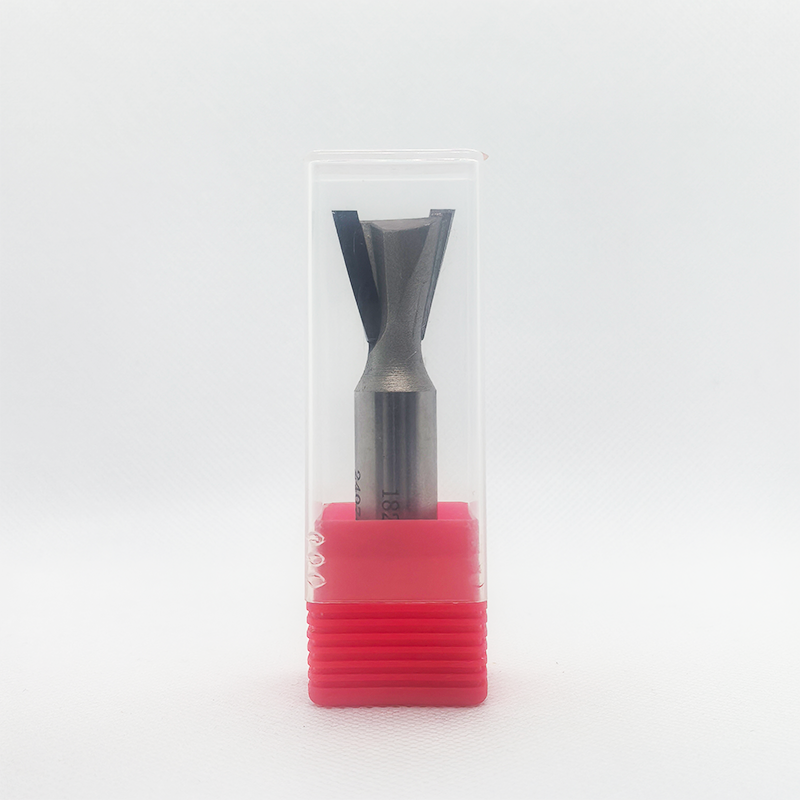
In the world of solid wood furniture and fine woodworking, dovetail joints are hailed as the “soul of woodworking” due to their strong tensile strength and attractive appearance. A key tool for achieving high-quality dovetail joints is the woodworking dovetail router bits. This specialized tool is used to create dovetail joints. It creates a strong connection between wood pieces by cutting interlocking “dovetails” and “trapezoidal grooves,” maintaining high stability without the need for nails or glue. It is primarily used for producing high-precision, high-efficiency dovetail joints and is widely used in traditional woodworking, modern furniture production, fine woodworking, and DIY projects.
What are the specific applications and characteristics of a dovetail router bits, and how are they used?
1.Traditional Woodworking and Restoration of Classical Furniture
The dovetail joint is a classic structural element found in Ming and Qing dynasty furniture (such as tables, chairs, cabinets, and screens). In traditional craftsmanship, it requires manual chiseling, which is time-consuming and demands a high level of skill. Dovetail chisels (especially those designed for manual dovetail jigs or small electric/pneumatic tools) can precisely replicate the angles (commonly 1:5 or 1:6), depth, and spacing of traditional dovetails. This helps restore the original structural precision during the restoration of antique furniture while avoiding damage to the aged wood.
2.Modern solid wood furniture making
Modern high-end solid wood furniture (such as Scandinavian-style dining tables, Japanese-style storage cabinets, and solid wood bookshelves) often incorporates dovetail joints to enhance structural aesthetics and durability (exposed dovetail joints have even become a design highlight). CNC Dovetail Joint Machine Cutting Tools: In industrial production, CNC machines equipped with dovetail cutters can mass-produce standardized dovetail joints (such as connections between drawer side panels and fronts, or corner joints in cabinet frames). This method is far more efficient than manual labor, with dimensional tolerances controlled within 0.1 mm. Bench-top Dovetail Machines / Handheld Electric Dovetail Cutters: Ideal for small and medium-sized workshops or custom furniture manufacturers, these tools enable the rapid production of non-standard dovetails (such as corner joints for irregularly shaped cabinets), balancing flexibility with precision.
3.Fine Woodworking and Handicrafts
Due to its aesthetic appeal and structural stability, the dovetail joint is commonly used in the internal construction or decorative finishes of fine crafts such as wood carvings, jewelry boxes, and music boxes.
4.DIY and Woodworking Projects
For DIY woodworkers, a dovetail joiner is an essential tool for creating “nail-free, glue-free” projects, making it particularly well-suited for crafting personalized home accessories (such as toolboxes, bookshelves, and pet beds). Entry-level manual dovetail jig and blade set: Beginners can use the template for alignment and, with a small hand saw or chisel guided by the dovetail jig’s guide slots, easily cut precise dovetail joints, lowering the learning curve; Portable Electric Dovetail Jig: Ideal for home workshops, it handles medium-hard woods (such as pine, oak, and walnut), allowing for quick assembly of drawers and small cabinets, providing a strong sense of accomplishment.
5.Architecture and Timber Engineering
In traditional timber architecture (such as Chinese temples, covered bridges, and mortise-and-tenon timber houses) or modern timber structures (such as secondary load-bearing joints in CLT buildings), dovetail joints are used to connect critical components such as beams, columns, and purlins, thereby enhancing overall seismic resistance and stability. Large-scale dovetail jointer blades: Designed for large-section timber (such as square timber measuring 200 mm × 200 mm or larger), heavy-duty dovetail jointer blades are used to machine large-scale dovetail joints, ensuring that structural joints can withstand long-term loads (such as wind and seismic forces).
Advantages of Dovetail Cutters
- Controllable precision: Through standardized tool design (fixed bevel angle and number of teeth), angular deviations caused by manual chiseling are eliminated, ensuring that mortise and tenon joints fit together perfectly;
- Increased efficiency: Electric/CNC dovetail cutters operate 5 to 10 times faster than manual methods, making them ideal for mass production or tight deadlines;
- Reduce material waste: Precise cutting minimizes wood waste (especially for valuable hardwoods), and the high strength of mortise-and-tenon joints reduces future maintenance costs;
Important Notes
- Tool Selection: Choose the appropriate dovetail cutter based on wood hardness (coarse-toothed cutters for softwood, fine-toothed cutters for hardwood) and tenon size (wide-bladed cutters for large dovetails, small-diameter cutters for small dovetails);
- Equipment Compatibility: CNC cutters must be matched to the machine tool’s spindle speed and feed rate to prevent chipping or machining defects;
- Safety precautions: High-speed rotating dovetail cutters must be equipped with safety guards to prevent flying wood chips or injuries caused by tool breakage.
The dovetail cutter is one of the core tools in the transition from “traditional craftsmanship” to “modern manufacturing” in the woodworking industry. For modern CNC machining and mass production of solid wood furniture, diamond-tipped dovetail cutters are the optimal choice; their service life far exceeds that of cutters made from other materials, significantly reducing downtime caused by tool changes.
Looking for high-precision PCD dovetail router bits for your CNC machines? Contact Liho Tools today for standard tools or custom single-piece manufacturing.