
Pre-milling prepares a panel edge before edge banding. The cutter removes a small machining allowance to improve the edge condition and remove minor defects left by the previous cutting operation.
For furniture and cabinet manufacturers, the goal is a consistent edge that supports the bonding process. PCD can help in suitable applications, but choosing it requires more than comparing purchase prices.
Why consider PCD?
Polycrystalline diamond, or PCD, offers high resistance to abrasive wear. In suitable wood-based panel applications, this can mean longer intervals between sharpening or tool changes compared with carbide.
That advantage can be valuable on production lines processing repeat orders. Fewer changes may reduce interruptions and help maintain consistent machining quality over a longer run.
However, there is no reliable universal tool-life multiplier. Performance depends on the panel, cutter design and operating conditions.
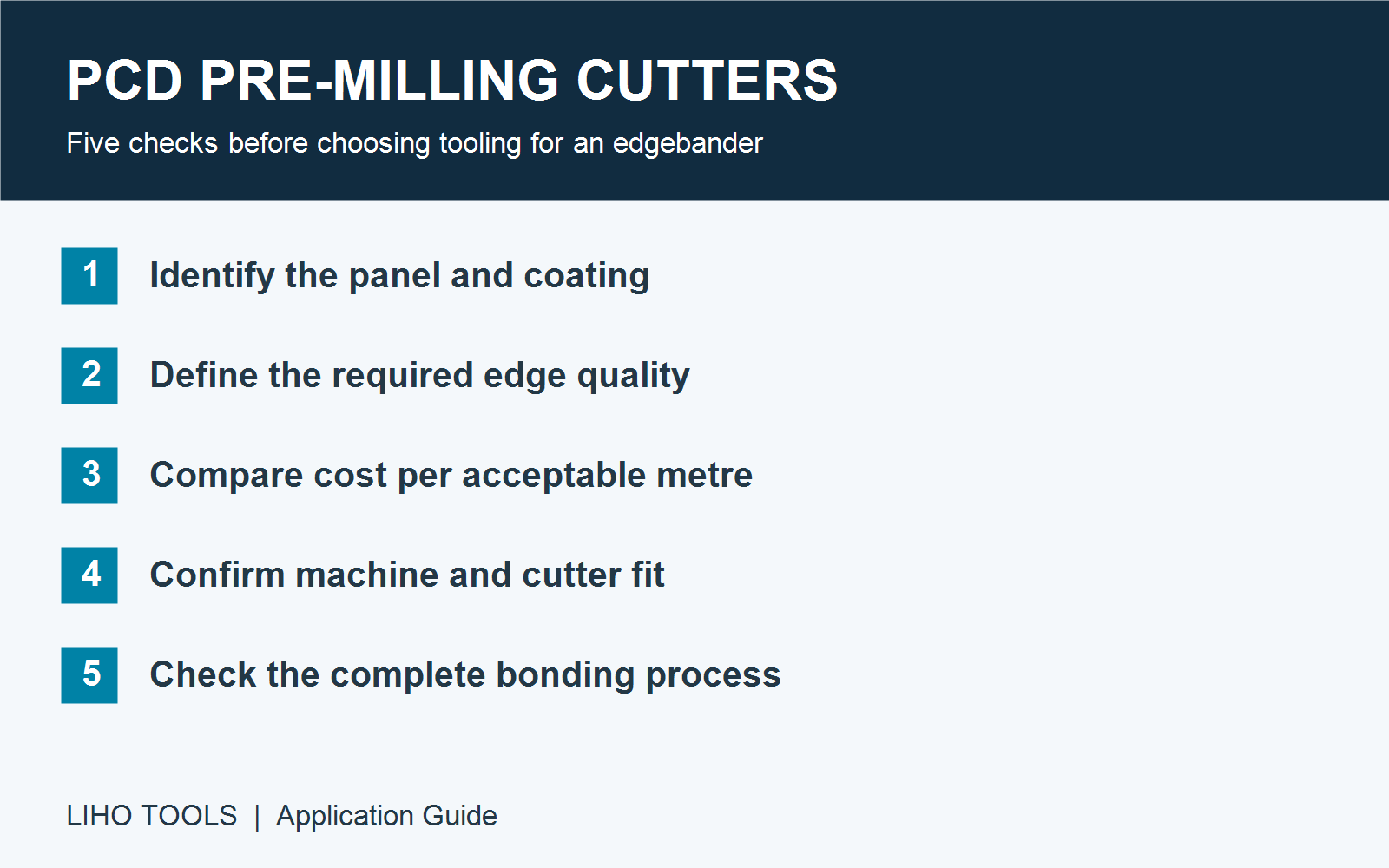
Start with the actual panel
A surface label alone does not provide enough information to select a cutter.
The core material, decorative layer, panel thickness and required edge quality all matter. A setting that works well on one melamine-faced panel may need adjustment for another.
Feed speed, spindle speed and stock removal must also suit the tool and machine. Cutter geometry, mounting accuracy and chip extraction influence the cutting result.
When requesting a recommendation, provide the panel specification and describe the problem: chipping, visible cutter marks, frequent tool changes or inconsistent edge quality.
Compare cost per acceptable metre
PCD usually requires a higher initial investment than carbide. Whether it is economical depends on what happens during production.
A practical comparison includes:
- Tool purchase and sharpening costs
- Machine downtime and labour for tool changes
- Accepted metres produced between changes
- Scrap and rework associated with edge defects
For a defined comparison period, divide the relevant tooling, changeover, scrap and rework costs by the metres that meet your agreed edge-quality requirement. Use the same cost categories for both options and avoid counting the same loss twice.
Compare both options against the same finish requirement. Metres processed after the edge quality becomes unacceptable should not count as useful tool life.
Resharpening potential also varies with cutter design, remaining PCD and damage condition. Confirm it for the specific tool rather than assuming a fixed number of sharpening cycles.
Confirm fit and protect the cutting edges
Machine brand alone does not establish compatibility. Check the exact model and pre-milling unit, cutter diameter, bore or mounting interface, cutting height, rotation direction, maximum permitted speed and installation requirements.
PCD is wear-resistant, but its cutting edges can chip under impact. Prevent contact with nails, foreign objects and machine components, and handle the cutter carefully during installation.
Pre-milling is one part of the process
A well-prepared panel edge supports a clean joint, but cannot guarantee the final appearance or bond. Adhesive selection, application temperature, pressure, feed settings and panel condition also need attention.
For your next tooling enquiry, share the panel material, machine model and current cutter dimensions with LIHO Tools. These details provide a practical starting point for discussing a suitable PCD solution.
Explore our PCD edgebander tooling and confirm the exact tool specification for your pre-milling unit.